
























Singapore’s Formaldehyde Ban: What Every Homeowner Must Know Before 2026

Imagine moving into your dream HDB flat. New cabinets. Fresh paint. That satisfying “new home smell.” But within weeks, your toddler develops a persistent cough. Your elderly mother complains of stinging eyes. Nobody connects the dots — until a friend opens a wardrobe and says: “That smell isn’t freshness. That’s formaldehyde.”
This isn’t a hypothetical scenario. It happened to Ms Ena Lee and her family in Hougang. It happened to a family at Normanton Park in Queenstown. And according to treatment firms across Singapore, it is happening to hundreds of families every single month.
As of 1 January 2026, Singapore has officially banned formaldehyde in interior paints. But the story is much bigger than paint. It involves your doors, your cabinets, your flooring — every piece of wood-based product inside your home. Here is the full story, told from the beginning.

What Exactly Is Formaldehyde — and Why Should You Care?
Formaldehyde is a colourless gas with a strong, sour-pickle-like odour. The World Health Organization classifies it as a Group 1 human carcinogen — the same category as tobacco smoke and asbestos. It is among the 25 most widely produced chemicals in the world, according to the U.S. Agency for Toxic Substances and Disease Registry.
In homes, formaldehyde hides in plain sight. It is embedded in the adhesives and resins used to manufacture pressed wood products like plywood, particleboard, and MDF (medium-density fibreboard). It is used as a preservative in certain paints. It is present in some furniture finishes, vinyl flooring adhesives, and even certain textiles.
When these products are installed in your home — especially in an enclosed, air-conditioned environment like a typical Singapore flat — formaldehyde “off-gases” into the indoor air. In Singapore’s humid climate, with average humidity around 84%, this chemical release actually accelerates. And it does not stop in a few days. Depending on the material, formaldehyde can continue releasing toxic gas for six months to two years.
Children: Formaldehyde gas concentrates below one metre from the floor — exactly where young children breathe, play, and crawl. Their faster breathing rate and developing immune systems make them 2–3 times more susceptible. Medical reports have linked high exposure in children to childhood leukaemia and severe asthma.
Elderly: Weakened respiratory systems and fragile blood vessels make elderly residents more prone to bronchial asthma, lung irritation, persistent sore throat, and skin allergies from prolonged exposure.
Pregnant Women: Long-term inhalation has been linked to headaches, nausea, and palpitations, with potential adverse effects on foetal development.

From Announcement to Enforcement: The Full Government Timeline
Singapore’s journey toward banning formaldehyde has been methodical and deliberate. Here is every major step the government has taken over the past two years:
“Prolonged exposure to formaldehyde can lead to negative health effects, such as respiratory discomfort and an increased risk of certain cancers.” — Minister Grace Fu, Ministry of Sustainability and the Environment, Parliament of Singapore (March 2024)
Beyond Paint: Why Your Doors and Furniture Matter Even More
The current ban rightly targets interior paints — but here is what many Singaporeans still do not realise: paint is only part of the problem. In many homes, the larger and longer-lasting source of formaldehyde is actually the composite wood products around you.
Why? Because paint uses formaldehyde as a preservative in relatively small quantities, and emissions tend to reduce as the paint dries and cures. But composite wood products — your wardrobe panels, kitchen cabinets, bedroom doors, and built-in shelving — use formaldehyde-based resins as the actual bonding agent holding the material together. This means formaldehyde is embedded deep within the product and off-gases continuously for months, sometimes years.
MDF, in particular, has the highest resin-to-wood ratio of any pressed wood product and is widely recognised as the highest formaldehyde-emitting material, according to the U.S. Environmental Protection Agency. In a hot, humid Singapore flat with windows closed and air-conditioning running, these emissions have nowhere to escape — they simply accumulate.
This is precisely why the government has signalled that wood products are next in line for regulation. In his August 2024 parliamentary statement, Senior Parliamentary Secretary Baey Yam Keng acknowledged that “composite wood products and adhesives may emit formaldehyde” and confirmed NEA is reviewing international best practices for potential new controls. By April 2025, MSE confirmed this review is actively ongoing.
As stated in parliamentary replies from August 2024 and April 2025, NEA is actively reviewing regulatory requirements for formaldehyde in:
• Composite wood products (plywood, MDF, particleboard)
• Wood-based adhesives and glues used in carpentry
• Furniture and building materials with formaldehyde-based resins
No timeline has been announced, but the direction is clear: stricter regulations are coming.
The “Door Problem” Nobody Talks About
Think about every door in your home. Your main door. Your bedroom doors. Your kitchen door. How often do you clean them? How often do you wash them?
For most Singaporean households, the honest answer is: almost never. And there is a good reason for that. Traditional wood doors absorb water. A splash of water can cause the wood to swell, warp, or develop mould. In many households, especially among older generations, there is a deep-seated understanding that water and wooden doors simply do not mix — “pour water, the door will expand; scrub it, it will bloat; leave it damp, mould will creep in.”
So families avoid cleaning doors altogether, allowing dust, allergens, and potentially off-gassed chemical residue to accumulate year after year on a surface that every family member touches multiple times daily — from the toddler reaching for the handle to the elderly parent steadying themselves as they walk through.
This is a genuine problem. A door made from cheap composite wood with formaldehyde-based adhesives does not just emit harmful gas — it becomes a surface that families avoid maintaining, compounding the hygiene issue silently.

How Is Singapore’s Building Industry Responding?
The response from Singapore’s building and renovation industry has been mixed — but the direction is clearly shifting toward safer materials.
Industry Bodies Taking the Lead
As early as 2022, the Alliance for Action on Sustainable Spaces — jointly formed by the Singapore Business Federation, the Singapore Furniture Industries Council (SFIC), and the Singapore Green Building Council (SGBC) — developed industry guidelines recommending formaldehyde emission limits for indoor products. SFIC’s website now lists member companies that have pledged to supply or adopt low or no-formaldehyde products.
The Certification System Homeowners Should Know
| Certification | What It Means | Administered By |
|---|---|---|
| Singapore Green Labelling Scheme (SGLS) | Wood products certified to have low or non-detectable formaldehyde levels. Paints must contain zero formaldehyde. | Singapore Environment Council |
| Singapore Green Building Product (SGBP) | Products meeting strict indoor air quality and sustainability standards. | Singapore Green Building Council |
| E0 Rating | International standard indicating extremely low or non-detectable formaldehyde emissions from wood products. The safest grade for home use. | International standard bodies (JIS, EN) |
| E1 Rating | Low formaldehyde emissions — acceptable for general use but not as stringent as E0. | International standard bodies |
Both NEA and MSE have publicly encouraged Singaporeans to choose products certified under the SGLS or SGBP schemes. In parliamentary statements, the government has specifically urged consumers to “research products used in home furnishings” and “question contractors about the type of paint being used and its formaldehyde content.”
Not Everyone Is Complying — And That’s the Problem
While major paint manufacturers have already reformulated their products, compliance across the wider building materials industry remains uneven. Renovation forums like HardwareZone and Hometrust are filled with stories of homeowners discovering dangerously high formaldehyde levels after handover from interior designers.
One Hometrust user reported formaldehyde levels exceeding safety limits by more than 10 times in their newly renovated living room. Another family’s home remained uncomfortable even after two weeks of ventilation with all windows open and fans running.
The reality is this: the ban on formaldehyde in paint is an important first step, but without regulations covering wood products and adhesives — which are often the bigger emission sources — the burden of due diligence still falls heavily on the homeowner.
A Homeowner’s Awareness Guide: Protecting Your Family Today
Formaldehyde is officially banned in interior paints as of January 2026. But many Singaporeans remain unaware of the broader risks from wood products, adhesives, and furniture already in their homes. Here is what every household should know:
How to Detect Formaldehyde in Your Home
Physical symptoms: Persistent eye irritation, runny nose, sore throat, coughing, headaches, or skin rashes — especially if symptoms improve when you leave the house and return when you come back. This pattern is a key indicator.
The smell test: A strong chemical odour resembling sour pickles or vinegar near new furniture or cabinets is a strong sign. As one respiratory physician advises: “If you can smell it, it is there.”
Testing options: DIY test kits are available in Singapore for S$20–50. Professional indoor air quality testing provides more precise measurements and can identify specific sources.
Immediate Steps You Can Take
- Ventilate aggressively after renovation. Keep windows and doors open for at least 7–14 days before moving in. Use fans to promote cross-ventilation. Air-conditioned environments trap formaldehyde.
- Check certifications before buying. Ask your contractor or supplier for E0 ratings on all wood products. Request documentation. Insist on seeing the Singapore Green Label or SGBP certification.
- Include formaldehyde clauses in renovation contracts. Legal professionals recommend adding clear provisions limiting the use of formaldehyde-containing materials in your renovation agreement.
- Invest in the right air purifier. Choose models with activated carbon filters specifically rated for VOC and formaldehyde removal. Not all air purifiers are effective — check independent reviews.
- Choose solid timber or certified laminate over cheap MDF. Solid wood and high-quality laminate-finished doors do not rely on formaldehyde-based adhesives and are designed for longevity and safety.
- Clean your doors regularly. With water-resistant door materials, you can wipe surfaces with a damp cloth without fear of swelling or warping — removing accumulated dust and potential chemical residue.
Industry Spotlight: Companies Getting It Right
While many in the renovation industry are still catching up with the regulatory direction, some companies have been ahead of the curve — investing in formaldehyde-free solutions before the government mandate made it necessary.
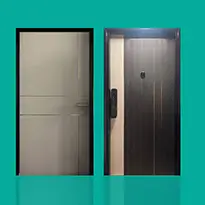
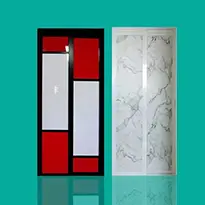
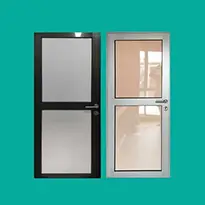
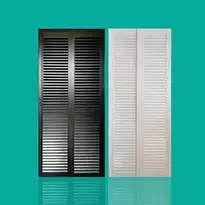
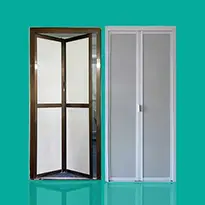
E0-rated doors as standard practice. Rather than offering low-formaldehyde options as a premium upgrade, Laminate Door provides E0-rated formaldehyde-free doors across their product range. The E0 standard — the highest safety grade — ensures that formaldehyde emissions are virtually non-detectable, meeting the strictest international air quality requirements.
Solid timber core construction. Their doors use full solid timber rather than cheap particleboard or MDF cores. This fundamentally eliminates the main source of formaldehyde off-gassing in conventional doors — the urea-formaldehyde resins used to bind wood particles together.
Practical durability that enables better hygiene. With water-resistant, scratch-resistant laminate surfaces, their doors can be cleaned with a damp cloth regularly — solving the long-standing problem of doors being the one surface in the home nobody ever cleans. When your door does not swell, warp, or absorb water, maintaining it becomes as natural as wiping down a kitchen countertop.
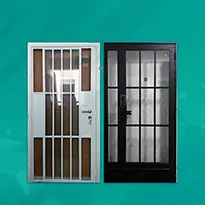
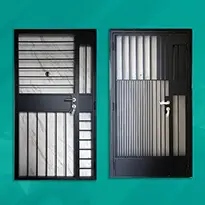
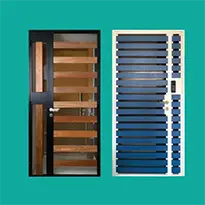
Complete home renovation ecosystem. Beyond doors, the company provides gates, digital locks, and interior renovation services — all adhering to current government safety norms. Their 18-month door warranty reflects confidence in material quality. Importantly, these safety features are included as standard — even when customers do not specifically ask for them.
The formaldehyde conversation is not about one company or one product. It is about an industry-wide shift toward accountability. When companies voluntarily adopt the highest safety standards — and educate customers about why those standards matter — they help build an informed consumer base that benefits everyone. Every Singaporean family deserves to know what materials are in their home and whether those materials are safe.
The Road Ahead: What Singapore Can Expect Next
The formaldehyde ban on interior paints is just the beginning. Based on parliamentary statements and NEA’s stated direction, here is what informed observers expect:
| Area | Current Status (March 2026) | Expected Direction |
|---|---|---|
| Interior Paints | Ban enforced since 1 Jan 2026. Formaldehyde content must be below 0.01% w/w. | Active enforcement and market surveillance by NEA. |
| Composite Wood Products | Under active review by NEA (confirmed April 2025). | Potential new regulations aligning with EU and China standards. |
| Adhesives & Glues | Under active review alongside wood products. | Likely to be included in any expanded regulatory framework. |
| Furniture Standards | Currently voluntary (SGLS, SGBP certifications). Industry self-regulation through SFIC alliance. | Mandatory standards possible if voluntary measures prove insufficient. |
| Public Awareness | NEA publishing advisories. Media coverage increasing. Parliamentary attention sustained. | Government-industry education campaigns. Consumer protection measures. |
Your Family Deserves Clean Air: Take Action Now
The Singapore government has taken a strong first step. The paint industry has responded. The furniture and door industries are beginning to follow. But the most important person in this equation is you.
Every homeowner, every parent, every caregiver has the right to know what chemicals are present in their living space. The formaldehyde ban is not just a regulation — it is a public health milestone that empowers you to ask better questions, demand safer materials, and make informed decisions.
Step 1: Audit your home. If you renovated in the past 3 years, consider a formaldehyde test — DIY kits or professional services. Pay special attention to closed cabinets and rooms with limited ventilation.
Step 2: Ask the right questions. Before your next renovation, ask your contractor: What formaldehyde rating do your wood products carry? Can you provide E0 certification? What adhesives do you use?
Step 3: Spread awareness. Share this information with family, friends, and neighbours — especially those with young children, elderly parents, or family members with respiratory conditions. Awareness is the strongest form of protection.
Sources & Further Reading
NEA: No Formaldehyde in Interior Paints From 1 January 2026
MSE: Oral Reply to Parliamentary Questions on Indoor Formaldehyde Levels (Aug 2024)
MSE: Written Reply on Formaldehyde and VOCs (Apr 2025)
NEA: Formaldehyde in Interior Building Products Advisory
Panels & Furniture Asia: Singapore Ban Report
WHO: Household Air Pollution and Health
Singapore Standard SS 554:2016 (Indoor Air Quality)
This article was researched and written using publicly available sources including parliamentary records from the Ministry of Sustainability and the Environment (MSE), official NEA advisories, CNA reporting, the Malay Mail, Home & Decor Singapore, Panels & Furniture Asia, and independent Singapore home renovation forums.


